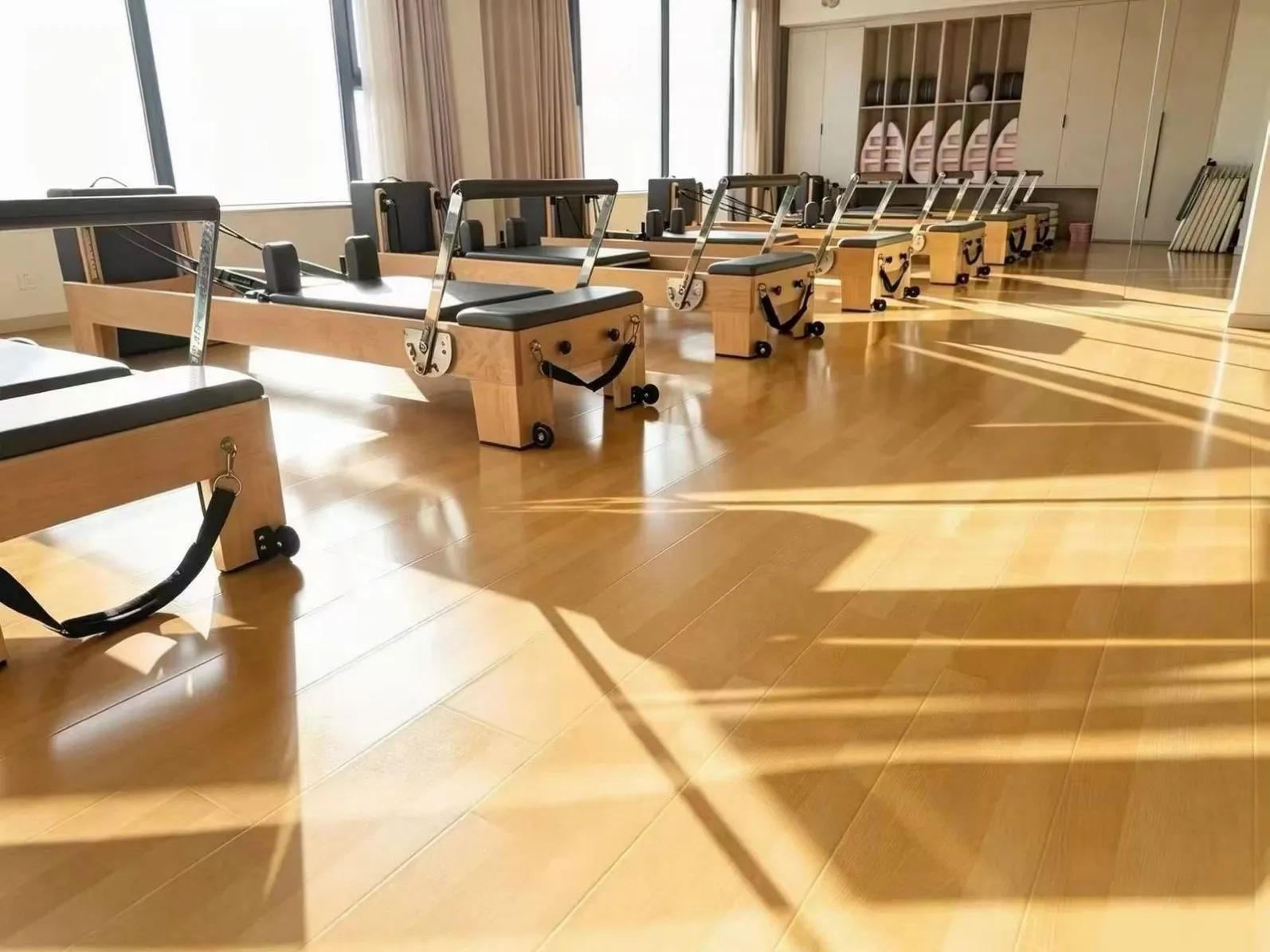
Every studio owner asks the same first question: what will the equipment cost me? There is no single honest number, because the total depends on four decisions you make before you ever ask for a quotation — how many reformers, which configuration, which frame material, and on what shipping terms. This guide breaks the equipment budget down line by line, so you can see exactly where the money goes and where you can save without buying the wrong machines.
Start with class size, not with machines
Your reformer count is your class capacity. Most first studios start with 6 to 8 reformers: enough for a full class, small enough to keep the first order manageable. Growing studios and franchises usually standardise on 8 to 12 per room. Decide the class size first — every other line in the budget scales from it. Our studio packages are built around 6, 8 and 12 reformers for exactly this reason.
The core units
The reformers themselves are the largest line. Three choices move the price:
- Frame material. Oak (rubberwood) is the value end of the wooden range, maple is the premium solid wood, and aluminium frames sit in their own price band.
- Configuration. A plain reformer is the base unit. Adding a half tower adds the tower structure and a second set of springs, and a full tower or Cadillac conversion adds more again. Buy the configuration your programming actually uses — towers can be added to an order later, but freight makes small follow-up shipments expensive.
- Specification. Rails, springs and upholstery are where quotes quietly differ. Aluminium rails, German piano-wire springs and microfiber upholstery cost more than base specifications — and are usually worth it on machines that will run classes all day.
The second row of equipment
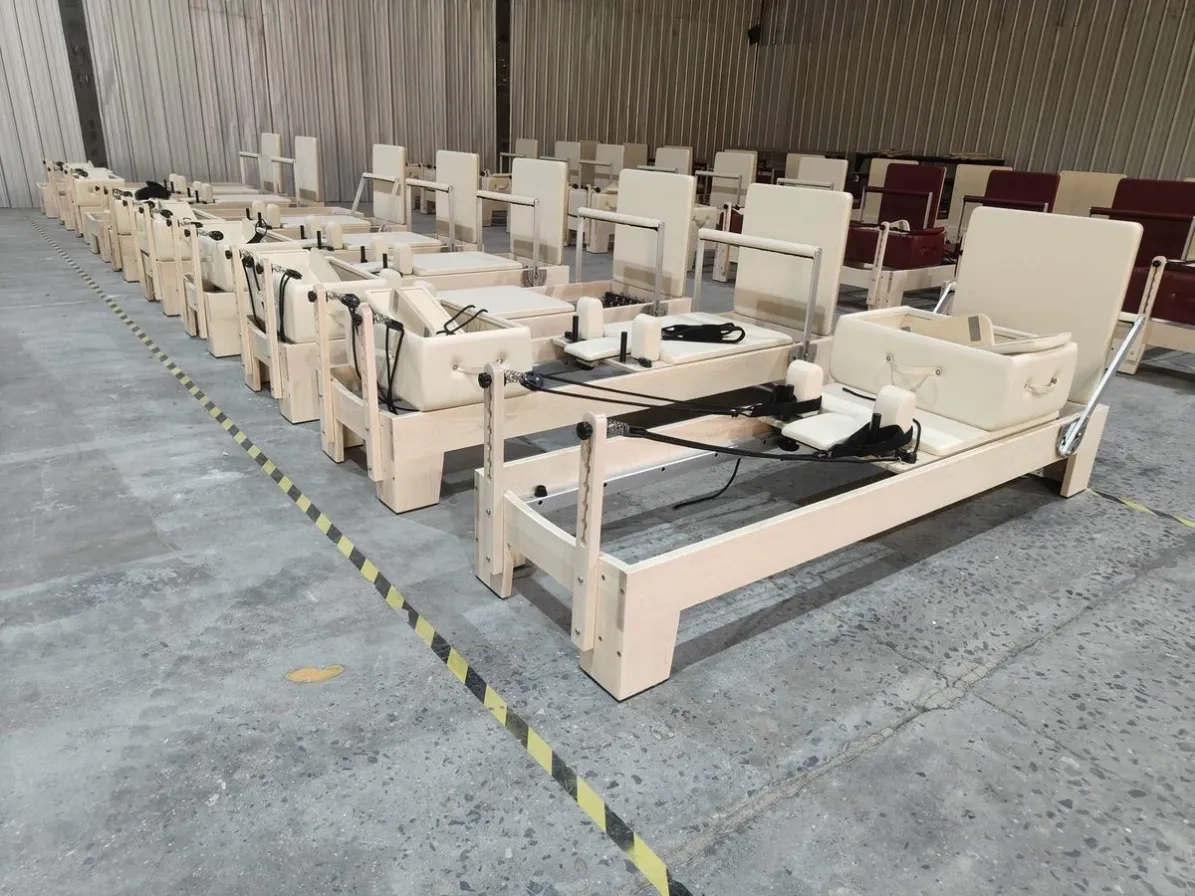
A reformer-only studio limits its own programming. Most studios add Wunda chairs, ladder barrels and spine correctors alongside the reformers — typically fewer pieces than the reformer count. These are smaller, cheaper items, and they ship in the same consignment as the reformers, so their share of the freight is minor when they are ordered together.
Accessories and spare parts
Mats, rings, balls and bands are a small line with an outsized effect on opening day: classes cannot run without them. Budget also for a wear-parts kit from day one — spare springs, straps, wheels and ropes matched to your machines. A broken spring with no spare means a reformer out of service while a small parcel crosses the ocean; a kit ordered with the machines costs almost nothing in extra freight.
The delivered cost is the real budget
The machine price is not the budget. Equipment is packed in plywood crates, and sea freight is charged on billable weight — the greater of the actual weight and the volumetric weight (length × width × height in cm ÷ 6000). Two consequences matter for a small studio:
- One combined shipment beats several small ones. Freight is priced per shipment, so reformers, chairs and accessories travelling together cost far less per piece than the same items sent separately.
- Know what your quote includes. Under CIF, destination port charges, clearance and local taxes are yours to pay on arrival. Under DDP, the price runs to your door. Comparing two quotes on different terms is comparing two different budgets.
Work backwards from your opening date
Production of a made-to-order studio set takes about 15 days, and sea freight takes several weeks on top. If you are opening in March, the order needs to be placed well before — and note that Chinese factories close for roughly a month around Chinese New Year (late January to late February), when production stops and shipping space is scarce and expensive. The studios that open on time are the ones that ordered a season ahead.
Get your number
Send us your studio size, the reformer count you have in mind and your city, and we will build the budget line by line — machines, accessories, packing and delivered freight — usually within one business day. That is the number you can plan an opening on.